How I Mapped an Entire Research Field to Find What Nobody Has Studied Yet
How I Mapped an Entire Research Field to Find What Nobody Has Studied Yet
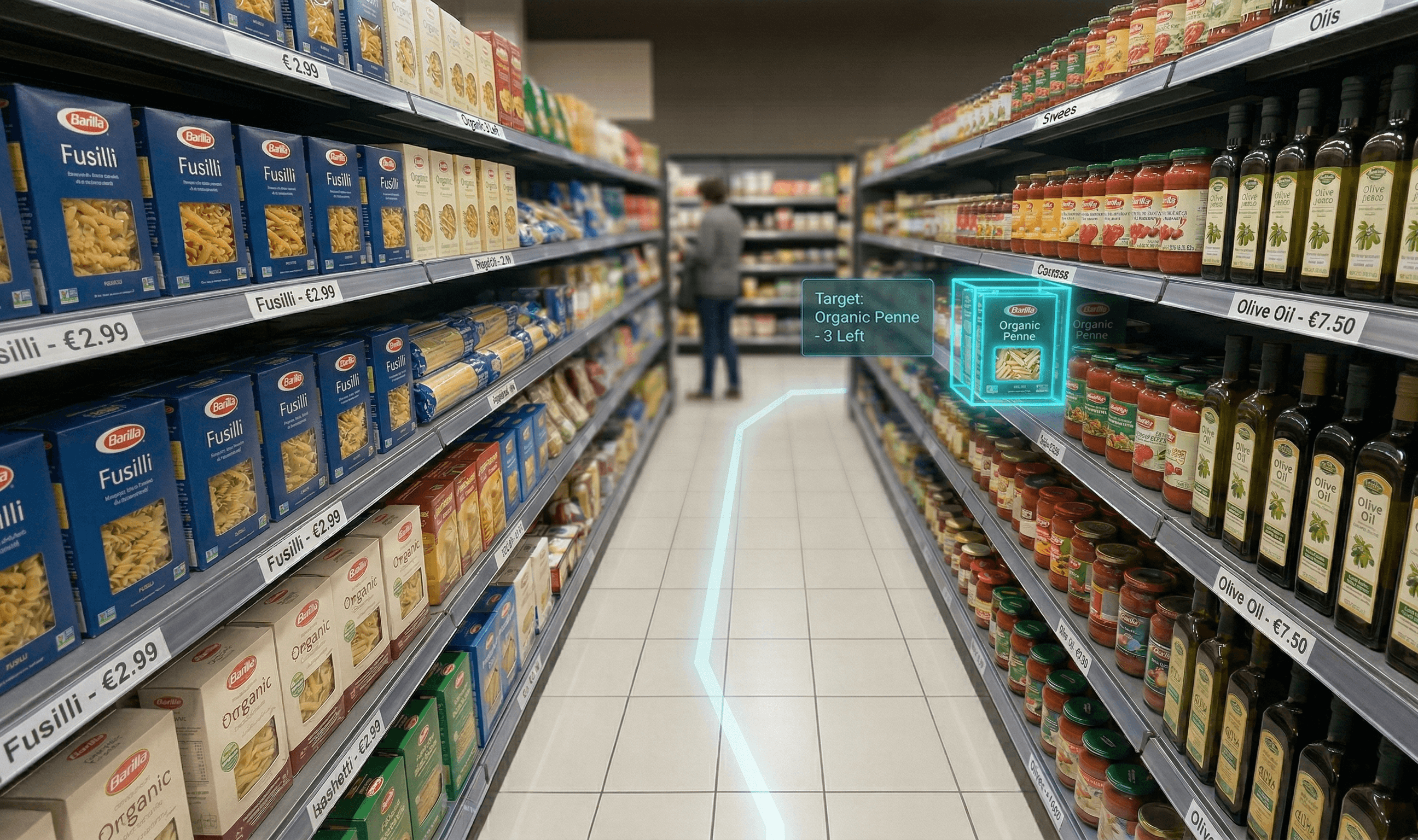
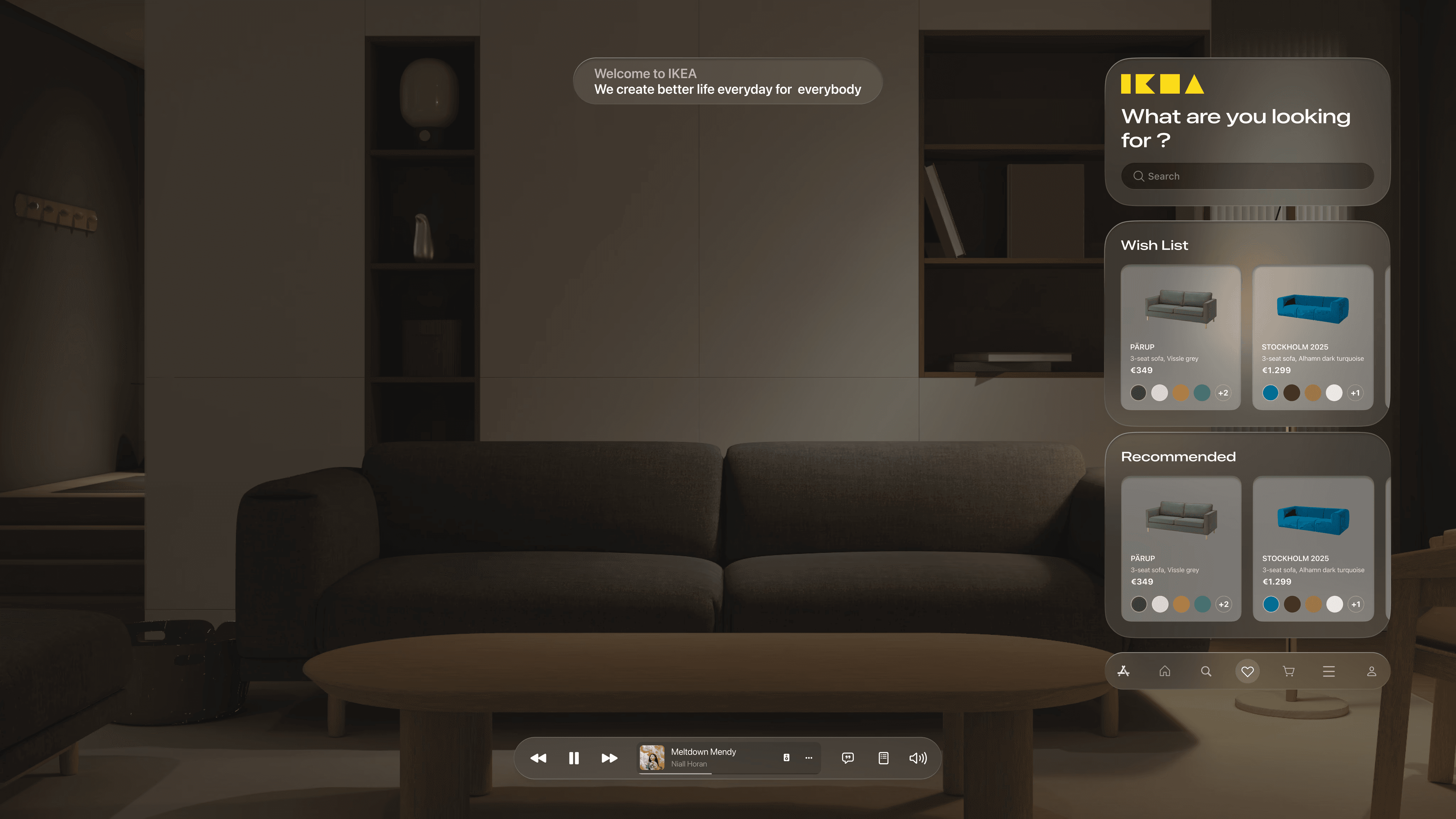
This text explains how the thesis proposal was rebuilt by systematically mapping the surrounding research field to identify a precise and defensible research gap. It shows how the literature was analyzed across AR wayfinding, AR retail, and warehouse picking studies, not just to find related work, but to determine exactly where existing research stops short of the thesis question. The post also highlights how this process shaped the study design, clarified the baseline, exposed key risks such as physical environment neglect, and ultimately supported a specific contribution: the first controlled HCI evaluation of a head-worn AR grocery shopping assistant in a realistic shopping context.
This text explains how the thesis proposal was rebuilt by systematically mapping the surrounding research field to identify a precise and defensible research gap. It shows how the literature was analyzed across AR wayfinding, AR retail, and warehouse picking studies, not just to find related work, but to determine exactly where existing research stops short of the thesis question. The post also highlights how this process shaped the study design, clarified the baseline, exposed key risks such as physical environment neglect, and ultimately supported a specific contribution: the first controlled HCI evaluation of a head-worn AR grocery shopping assistant in a realistic shopping context.

At some point during the rebuilding of my thesis proposal I stopped searching the literature for things that supported my idea and started searching it for things that could disprove it.
That is a different activity. Searching for support produces a reference list. Searching for disproof produces a literature review. The difference is what my original proposal lacked, and what the revised one required.
The question I needed to answer was precise: has anyone conducted a controlled HCI evaluation of a head-worn AR grocery shopping assistant, combining navigation, product information display, and product comparison, measuring task performance, usability, and cognitive workload against a baseline? If yes, my thesis was redundant. I needed to know with enough specificity to defend the answer.
The mechanics of mapping a field
I did not start by searching for my topic. I started by searching for the systematic reviews that had already mapped adjacent topics, because a good systematic review compresses years of literature into a navigable structure that tells you not just what was studied but where, who, and with what methods.
The most important document I found was Burova et al. (2025), a meta-analysis of 88 AR wayfinding studies published across the last decade in the journal Virtual Reality. I cross-referenced it against Qiu, Mostafavi, and Kalantari (2025), a separate systematic review of 65 AR wayfinding studies, and against Wolniak, Stecuła, and Aydın (2024), a review of digital transformation in grocery retail published in the journal Foods.
From there, I built search queries across ACM Digital Library, IEEE Xplore, Google Scholar, and Semantic Scholar, targeting combinations of head-worn AR, HMD, HoloLens, Meta Quest, grocery, retail, shopping, wayfinding, navigation, product information, cognitive workload, NASA-TLX, and SUS. For each paper returned, the question was not “is this related to my topic” but “does this answer my specific research question, and if not, where exactly does it stop?”
That last part is the work that takes time. Reading for where a study stops requires understanding what it measured, what population it used, what environment it was in, and what the task structure was. Those four coordinates together determine whether a study is genuinely close to your question or only superficially adjacent.
The first thing the map showed: a disciplinary divide
The most structurally important finding from the mapping was not a gap. It was a split.
The literature on AR in retail is large. But it divides cleanly along disciplinary lines, and the two halves answer different questions.
On one side: marketing and consumer behaviour research. This body of work is substantial and rigorous within its own framework. Pfeifer et al. (2023) ran the largest study of AR smart glasses in retail I found, with 308 participants, and produced strong evidence that head-worn AR outperforms touchscreen AR for immersion, reduces mental intangibility, and improves purchase-decision quality. Tan, Chandukala, and Reddy (2022) used field data to show that AR features measurably increase retail sales. Hoffmann, Joerß, Mai, and Akbar (2022) found that giving users too much control over AR product information can backfire. All real findings, carefully produced.
But none of these studies measure task completion time. None measure navigation errors. None use NASA-TLX or SUS. They answer “do shoppers feel better and buy more?” They do not answer “do shoppers perform better, and at what cognitive cost?” Those are different questions with different instruments, and the gap between them is where my thesis lives.
On the other side: HCI and interaction design research on AR in retail. This body of work is thin to the point that Wolniak et al. (2024), writing a review of digital grocery transformation, state explicitly that the academic HCI literature on AR in grocery is so sparse they had to rely on industry sources. That sentence is in a peer-reviewed journal. The absence is documented, not inferred.
The three streams that come close but stop short
Once the disciplinary structure was clear, I identified three research streams that each approach my research question from a different direction.
The first is AR wayfinding. Burova et al.’s meta-analysis of 88 studies provided the key number here: of 88 AR wayfinding studies, approximately 45% were in university buildings and campuses, 14% in hospitals, 17% in outdoor urban environments, 11% in museums. Retail and grocery environments accounted for less than 1%. Not less than 10%. Less than 1%. The one study that came near the territory used a virtual shopping mall to simulate evacuation behaviour. It measured where people ran during an emergency. That is not product finding.
The best single study in this stream for my purposes is NavMarkAR (Qiu, Ashour, Zhou, & Kalantari, 2024): a controlled evaluation of landmark-based AR wayfinding on HoloLens 2 with 32 participants, measuring wayfinding time, path efficiency, and spatial memory in a university building. Methodologically close to what I am doing. But the task was pure point-to-point navigation through corridors. No product search. No information retrieval. No comparison decisions. The compound structure of grocery shopping, where navigation is interleaved with search, inspection, and comparison, does not appear anywhere in the building navigation literature.
The second stream is AR in retail, specifically the HCI-oriented work. The Álvarez Márquez and Ziegler research programme (2019 to 2023) is the most developed: multiple user studies evaluating HMD-based product comparison and recommendation interfaces in physical retail settings, culminating in a 2023 paper in the International Journal of Human-Computer Interaction. This is the closest existing work to the product comparison component of my prototype. But their studies situate users at a shelf who are already ready to compare. There is no navigation, no shopping list, no prior product finding. The task is comparison in isolation, not comparison as part of a complete shopping workflow.
The third stream is warehouse order picking. Reif and Günthner (2009) and Schwerdtfeger, Reif, Günthner, and Klinker (2011) are the foundational papers. Multiple subsequent studies have evaluated AR glasses for pick-by-vision tasks using NASA-TLX and task completion time, which makes them the closest methodological precedents for my study design. The task structure even looks similar: find an item from a list, retrieve it, proceed to the next. But the user population is professional workers performing repetitive retrieval on memorised routes in a controlled industrial environment, not first-time consumers navigating an unfamiliar store, reading product labels, comparing options, and making real purchase decisions in a social public space.
Three streams. All approach the question. None close it.
The finding that inverted my assumption about smartphone baselines
One of the most important things the literature mapping revealed was a finding I did not expect and that directly shaped the study design.
Neeson, Lee, and colleagues (2025) ran a three-group comparison with 76 participants navigating a complex indoor building. One group used a head-mounted stereoscopic AR display (Magic Leap 2). One group used handheld monoscopic AR on an iPhone 15 Pro. One control group had no navigation aid.
The head-mounted group was fastest with the shortest distances, a result consistent with the broader literature. But the handheld AR group performed significantly worse than the control group who had nothing. Slower times. Longer distances. The smartphone AR condition actively impaired navigation compared to walking with no assistance at all.
The mechanism is the “head-down” interaction pattern. Every time you consult a smartphone, you break visual contact with the physical environment. In a navigation task, that interruption is costly enough to produce measurable performance degradation. The paper describes it as a divided attention penalty.
This finding matters for my study design because it argues directly for why the comparison should be AR against unassisted shopping rather than AR against a dedicated smartphone app. If even a smartphone AR navigation condition can produce worse outcomes than nothing, then testing head-worn AR against a purpose-built phone app would stack the baseline against the experimental condition in a way that does not reflect real-world behaviour. The baseline I use, unassisted shopping with natural phone use, is what people actually do today.
The risk hiding in the evidence: physical environment neglect
Mapping the literature honestly also means mapping its warnings, not just its positive results.
Kumaran, Batmaz, and colleagues (2023, ACM CHI) ran a wayfinding study with 24 participants using HoloLens 2. Participants navigating with in-world AR arrows recalled significantly fewer real physical objects in the environment than virtual ones. The effect has been replicated conceptually across multiple studies and was flagged as a consistent pattern in the Burova et al. meta-analysis under the term “physical environment neglect.” AR users pay attention to the virtual overlays. They miss things in the real world.
In a grocery context, this is not a minor side effect. A store is full of physical information that matters: shelf labels, sale stickers, allergen notices, the actual products. If AR navigation draws attention so strongly toward virtual cues that a shopper misses the product they are looking for, or fails to notice a price change between the overlay data and the physical label, the efficiency benefit of navigation could be partially or fully offset.
I include a secondary measure in my study design specifically because of this finding: after each condition, participants are asked to recall physical store elements that were not part of the AR overlay. Whether AR-assisted shoppers miss more real-environment information than unassisted shoppers is a question the literature flags as important and that my study is positioned to address in a grocery context for the first time.
The papers that look related but are not
A literature review that finds the gap also has to handle the papers that appear to close it but do not. Peer reviewers will find these papers. If they are not addressed, the work looks like it missed the field.
MarketMind AR (Kakoutopoulos et al., 2025) sounds like a retail AR study. It is a clinical cognitive assessment tool for adults aged 60 and above, using a supermarket theme as a gamified training environment. It measures cognitive screening scores, not shopping performance. Push2AR (Wieland et al., 2024) transfers phone shopping list items into AR headset space for browsing. It is a lab-based list interaction study with no navigation, no store environment, and no product finding. Farhansyah and Fabroyir (2026) compared AR devices in a retail context, but for the supply-side task of stocking shelves according to a planogram, performed by experienced retail workers at a single stationary shelf. And then there is the one paper with both “AR” and “grocery store navigation” in its title: Danee et al. (2023), a seven-page concept paper with no user study and no empirical results, published in a proceedings volume outside the HCI venue ecosystem.
None of these close the gap. Together they trace its boundary precisely. When you can name the closest papers and explain specifically why each one stops short, you have demonstrated the gap rather than asserted it.
What a demonstrated gap enables
The revised gap statement is: no published peer-reviewed study has evaluated a head-worn AR system that combines list-based product navigation, contextual product information display, and quick-comparison overlays in a grocery shopping context, using standard HCI performance metrics and validated instruments against a realistic unassisted baseline.
That statement is now supported by 88 studies that do not contain retail environments, by a published review that flags the absence, by a systematic mapping of which studies come closest and where they stop, and by a section that names and disqualifies the papers most likely to be raised as counterevidence.
What this enables is something important: a contribution that holds regardless of the result. If the AR system outperforms the baseline, that finding is the first empirical evidence of performance benefit for this specific application in this specific context. If it does not, if AR is slower or produces higher workload, that finding is equally valuable, because no prior benchmark exists for head-worn AR in grocery shopping at all. The first measurement of a thing is useful even when the measurement disappoints.
That is what a real gap gives you. Not just a justification for the study. Insurance that the study matters whatever it finds.
You can have the review of the Proposal here https://mseymur.framer.website/masters-proposal
At some point during the rebuilding of my thesis proposal I stopped searching the literature for things that supported my idea and started searching it for things that could disprove it.
That is a different activity. Searching for support produces a reference list. Searching for disproof produces a literature review. The difference is what my original proposal lacked, and what the revised one required.
The question I needed to answer was precise: has anyone conducted a controlled HCI evaluation of a head-worn AR grocery shopping assistant, combining navigation, product information display, and product comparison, measuring task performance, usability, and cognitive workload against a baseline? If yes, my thesis was redundant. I needed to know with enough specificity to defend the answer.
The mechanics of mapping a field
I did not start by searching for my topic. I started by searching for the systematic reviews that had already mapped adjacent topics, because a good systematic review compresses years of literature into a navigable structure that tells you not just what was studied but where, who, and with what methods.
The most important document I found was Burova et al. (2025), a meta-analysis of 88 AR wayfinding studies published across the last decade in the journal Virtual Reality. I cross-referenced it against Qiu, Mostafavi, and Kalantari (2025), a separate systematic review of 65 AR wayfinding studies, and against Wolniak, Stecuła, and Aydın (2024), a review of digital transformation in grocery retail published in the journal Foods.
From there, I built search queries across ACM Digital Library, IEEE Xplore, Google Scholar, and Semantic Scholar, targeting combinations of head-worn AR, HMD, HoloLens, Meta Quest, grocery, retail, shopping, wayfinding, navigation, product information, cognitive workload, NASA-TLX, and SUS. For each paper returned, the question was not “is this related to my topic” but “does this answer my specific research question, and if not, where exactly does it stop?”
That last part is the work that takes time. Reading for where a study stops requires understanding what it measured, what population it used, what environment it was in, and what the task structure was. Those four coordinates together determine whether a study is genuinely close to your question or only superficially adjacent.
The first thing the map showed: a disciplinary divide
The most structurally important finding from the mapping was not a gap. It was a split.
The literature on AR in retail is large. But it divides cleanly along disciplinary lines, and the two halves answer different questions.
On one side: marketing and consumer behaviour research. This body of work is substantial and rigorous within its own framework. Pfeifer et al. (2023) ran the largest study of AR smart glasses in retail I found, with 308 participants, and produced strong evidence that head-worn AR outperforms touchscreen AR for immersion, reduces mental intangibility, and improves purchase-decision quality. Tan, Chandukala, and Reddy (2022) used field data to show that AR features measurably increase retail sales. Hoffmann, Joerß, Mai, and Akbar (2022) found that giving users too much control over AR product information can backfire. All real findings, carefully produced.
But none of these studies measure task completion time. None measure navigation errors. None use NASA-TLX or SUS. They answer “do shoppers feel better and buy more?” They do not answer “do shoppers perform better, and at what cognitive cost?” Those are different questions with different instruments, and the gap between them is where my thesis lives.
On the other side: HCI and interaction design research on AR in retail. This body of work is thin to the point that Wolniak et al. (2024), writing a review of digital grocery transformation, state explicitly that the academic HCI literature on AR in grocery is so sparse they had to rely on industry sources. That sentence is in a peer-reviewed journal. The absence is documented, not inferred.
The three streams that come close but stop short
Once the disciplinary structure was clear, I identified three research streams that each approach my research question from a different direction.
The first is AR wayfinding. Burova et al.’s meta-analysis of 88 studies provided the key number here: of 88 AR wayfinding studies, approximately 45% were in university buildings and campuses, 14% in hospitals, 17% in outdoor urban environments, 11% in museums. Retail and grocery environments accounted for less than 1%. Not less than 10%. Less than 1%. The one study that came near the territory used a virtual shopping mall to simulate evacuation behaviour. It measured where people ran during an emergency. That is not product finding.
The best single study in this stream for my purposes is NavMarkAR (Qiu, Ashour, Zhou, & Kalantari, 2024): a controlled evaluation of landmark-based AR wayfinding on HoloLens 2 with 32 participants, measuring wayfinding time, path efficiency, and spatial memory in a university building. Methodologically close to what I am doing. But the task was pure point-to-point navigation through corridors. No product search. No information retrieval. No comparison decisions. The compound structure of grocery shopping, where navigation is interleaved with search, inspection, and comparison, does not appear anywhere in the building navigation literature.
The second stream is AR in retail, specifically the HCI-oriented work. The Álvarez Márquez and Ziegler research programme (2019 to 2023) is the most developed: multiple user studies evaluating HMD-based product comparison and recommendation interfaces in physical retail settings, culminating in a 2023 paper in the International Journal of Human-Computer Interaction. This is the closest existing work to the product comparison component of my prototype. But their studies situate users at a shelf who are already ready to compare. There is no navigation, no shopping list, no prior product finding. The task is comparison in isolation, not comparison as part of a complete shopping workflow.
The third stream is warehouse order picking. Reif and Günthner (2009) and Schwerdtfeger, Reif, Günthner, and Klinker (2011) are the foundational papers. Multiple subsequent studies have evaluated AR glasses for pick-by-vision tasks using NASA-TLX and task completion time, which makes them the closest methodological precedents for my study design. The task structure even looks similar: find an item from a list, retrieve it, proceed to the next. But the user population is professional workers performing repetitive retrieval on memorised routes in a controlled industrial environment, not first-time consumers navigating an unfamiliar store, reading product labels, comparing options, and making real purchase decisions in a social public space.
Three streams. All approach the question. None close it.
The finding that inverted my assumption about smartphone baselines
One of the most important things the literature mapping revealed was a finding I did not expect and that directly shaped the study design.
Neeson, Lee, and colleagues (2025) ran a three-group comparison with 76 participants navigating a complex indoor building. One group used a head-mounted stereoscopic AR display (Magic Leap 2). One group used handheld monoscopic AR on an iPhone 15 Pro. One control group had no navigation aid.
The head-mounted group was fastest with the shortest distances, a result consistent with the broader literature. But the handheld AR group performed significantly worse than the control group who had nothing. Slower times. Longer distances. The smartphone AR condition actively impaired navigation compared to walking with no assistance at all.
The mechanism is the “head-down” interaction pattern. Every time you consult a smartphone, you break visual contact with the physical environment. In a navigation task, that interruption is costly enough to produce measurable performance degradation. The paper describes it as a divided attention penalty.
This finding matters for my study design because it argues directly for why the comparison should be AR against unassisted shopping rather than AR against a dedicated smartphone app. If even a smartphone AR navigation condition can produce worse outcomes than nothing, then testing head-worn AR against a purpose-built phone app would stack the baseline against the experimental condition in a way that does not reflect real-world behaviour. The baseline I use, unassisted shopping with natural phone use, is what people actually do today.
The risk hiding in the evidence: physical environment neglect
Mapping the literature honestly also means mapping its warnings, not just its positive results.
Kumaran, Batmaz, and colleagues (2023, ACM CHI) ran a wayfinding study with 24 participants using HoloLens 2. Participants navigating with in-world AR arrows recalled significantly fewer real physical objects in the environment than virtual ones. The effect has been replicated conceptually across multiple studies and was flagged as a consistent pattern in the Burova et al. meta-analysis under the term “physical environment neglect.” AR users pay attention to the virtual overlays. They miss things in the real world.
In a grocery context, this is not a minor side effect. A store is full of physical information that matters: shelf labels, sale stickers, allergen notices, the actual products. If AR navigation draws attention so strongly toward virtual cues that a shopper misses the product they are looking for, or fails to notice a price change between the overlay data and the physical label, the efficiency benefit of navigation could be partially or fully offset.
I include a secondary measure in my study design specifically because of this finding: after each condition, participants are asked to recall physical store elements that were not part of the AR overlay. Whether AR-assisted shoppers miss more real-environment information than unassisted shoppers is a question the literature flags as important and that my study is positioned to address in a grocery context for the first time.
The papers that look related but are not
A literature review that finds the gap also has to handle the papers that appear to close it but do not. Peer reviewers will find these papers. If they are not addressed, the work looks like it missed the field.
MarketMind AR (Kakoutopoulos et al., 2025) sounds like a retail AR study. It is a clinical cognitive assessment tool for adults aged 60 and above, using a supermarket theme as a gamified training environment. It measures cognitive screening scores, not shopping performance. Push2AR (Wieland et al., 2024) transfers phone shopping list items into AR headset space for browsing. It is a lab-based list interaction study with no navigation, no store environment, and no product finding. Farhansyah and Fabroyir (2026) compared AR devices in a retail context, but for the supply-side task of stocking shelves according to a planogram, performed by experienced retail workers at a single stationary shelf. And then there is the one paper with both “AR” and “grocery store navigation” in its title: Danee et al. (2023), a seven-page concept paper with no user study and no empirical results, published in a proceedings volume outside the HCI venue ecosystem.
None of these close the gap. Together they trace its boundary precisely. When you can name the closest papers and explain specifically why each one stops short, you have demonstrated the gap rather than asserted it.
What a demonstrated gap enables
The revised gap statement is: no published peer-reviewed study has evaluated a head-worn AR system that combines list-based product navigation, contextual product information display, and quick-comparison overlays in a grocery shopping context, using standard HCI performance metrics and validated instruments against a realistic unassisted baseline.
That statement is now supported by 88 studies that do not contain retail environments, by a published review that flags the absence, by a systematic mapping of which studies come closest and where they stop, and by a section that names and disqualifies the papers most likely to be raised as counterevidence.
What this enables is something important: a contribution that holds regardless of the result. If the AR system outperforms the baseline, that finding is the first empirical evidence of performance benefit for this specific application in this specific context. If it does not, if AR is slower or produces higher workload, that finding is equally valuable, because no prior benchmark exists for head-worn AR in grocery shopping at all. The first measurement of a thing is useful even when the measurement disappoints.
That is what a real gap gives you. Not just a justification for the study. Insurance that the study matters whatever it finds.
You can have the review of the Proposal here https://mseymur.framer.website/masters-proposal