My Thesis Was Approved. The Review Said It Was Not Ready.
My Thesis Was Approved. The Review Said It Was Not Ready.
A look inside my approved thesis proposal at FH Joanneum: the problem I am trying to solve, the AR prototype I am building, and what a controlled study comparing head-worn AR against a smartphone baseline actually involves.
A look inside my approved thesis proposal at FH Joanneum: the problem I am trying to solve, the AR prototype I am building, and what a controlled study comparing head-worn AR against a smartphone baseline actually involves.
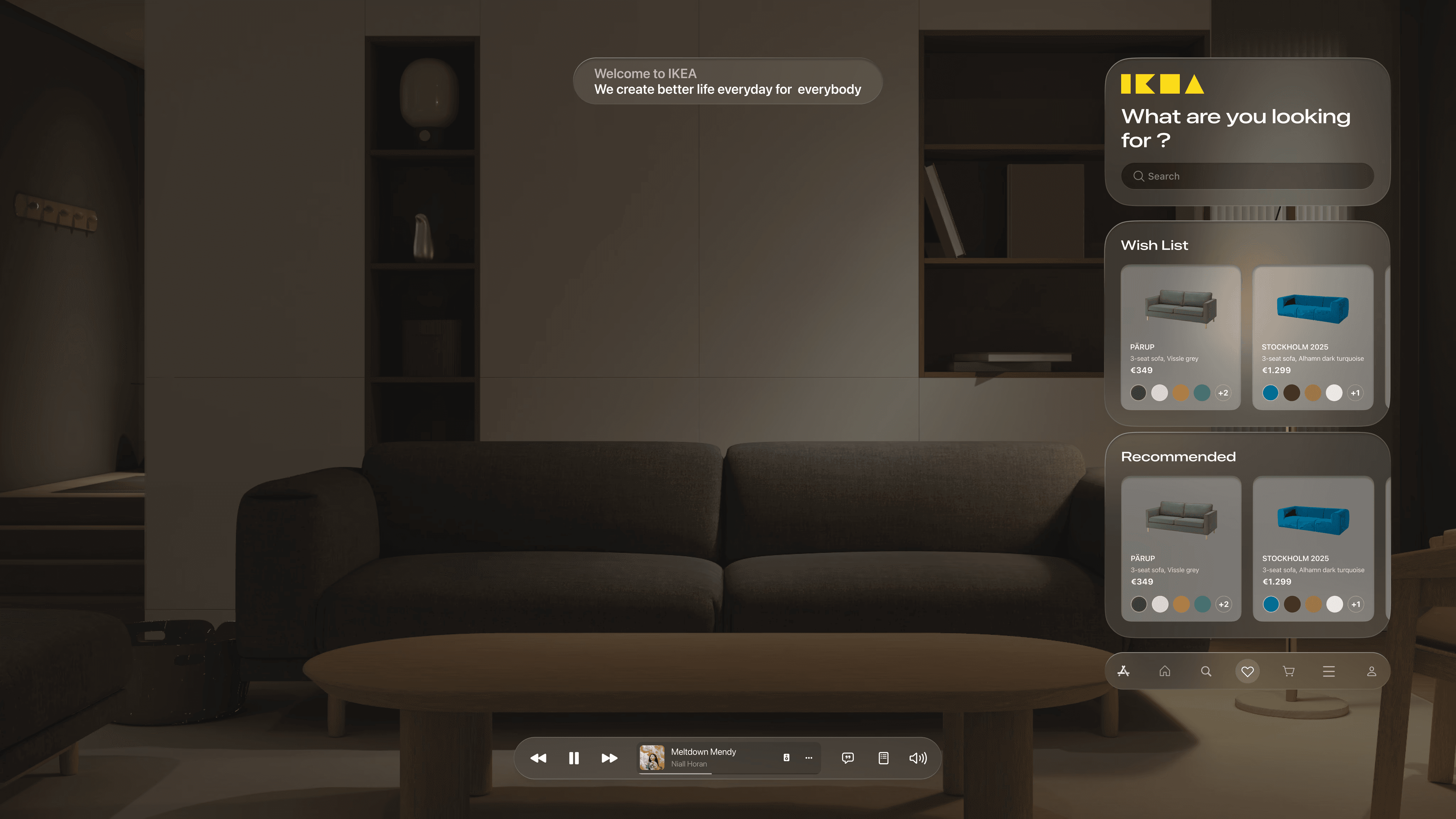
In February 2026 my supervisor at FH Joanneum signed my thesis approval form. The working title was “Evaluating Head-Worn AR and IoT-Based Contextual Information for In-Store Retail Shopping.” I had formal approval to proceed. But we knew I need to work on it more.
A few weeks later I received an independent academic review of that same proposal. The summary verdict was: “promising but underdeveloped. Conditional approval recommended pending revisions to scope, methodology, and timeline.”
Conditional. That word matters. The proposal had the right instincts: a legitimate research space, a commitment to empirical evaluation rather than a pure design portfolio piece, testable hypotheses, appropriate instruments. But between the instincts and the execution, there were problems serious enough that the review concluded the study could not be executed at the required level of rigor without significant changes.
I want to go through what those problems actually were. Not as a confession, but because understanding a proposal’s failure modes precisely is what makes the revision possible. And because this kind of honest audit is, I think, what separates a researcher from someone who just builds things.
The scope problem: trying to answer three questions with one study
The original proposal covered two retail scenarios, grocery and IKEA-style furniture, with three feature categories: wayfinding, product information overlays, and checkout/pickup status. It also proposed qualitative needs-finding, lo-fi prototyping, hi-fi Unity development, a pilot test, a main user study, data analysis, and complete thesis writing, all within approximately twelve weeks, while working eighteen hours per week in employment alongside it.
The review was precise about why this was a problem beyond just being too much: grocery and furniture stores have different spatial structures, different decision-making demands, and different information environments. Covering both in one study does not produce twice the knowledge. It produces diluted findings from both contexts, and a study design that cannot adequately control for the differences between them.
The right thesis, the review argued, is a narrow, well-executed evaluation of one scenario rather than a superficial sweep across two. Depth is the contribution, not breadth.
The IoT problem: a validity claim the study could not support
This was the most conceptually serious issue, and it deserves real unpacking.
The proposal was titled as an evaluation of “AR and IoT-Based Contextual Information.” But every mention of IoT in the methodology section included the qualifier “simulated or real.” Availability changes: simulated. Location updates: simulated. Pickup status: simulated. All of it pre-loaded as local data.
The review named the problem directly: if the IoT events are fully simulated, what is actually being tested is an AR overlay UI, not an IoT-integrated system. The title claimed one thing; the prototype delivered another. This is not a minor gap. It is a measurement validity problem. You cannot evaluate what you have not built, and calling fully hardcoded data “IoT-like signals” does not make it IoT.
The fix is not to build real IoT infrastructure, necessarily. Simulated environments have legitimate precedent in HCI research. But the framing needs to match what is actually present. Either define a minimal but genuine IoT integration and explain why simulation is an acceptable representation of it, or remove IoT from the thesis scope entirely and evaluate the AR overlay honestly for what it is.
The study design that was missing its design
The proposal committed to a controlled comparison against a non-AR baseline. That commitment was the most important structural decision in the document. But the section describing the study omitted the decisions that determine whether the comparison produces interpretable results.
Within-subjects or between-subjects? Not specified. How many participants? Not stated, and no statistical power rationale. What exactly is the study environment? Unclear whether it is a real store, a lab mockup, or a simulated space. What are the precise tasks? Described vaguely. What statistical tests? Absent. How will qualitative data be analysed? No method named.
These are not supplementary details. They are the study. A controlled comparison with no specification of its conditions, participants, environment, or analysis plan cannot be evaluated for validity or feasibility. The review noted that without this information, it was impossible to assess whether the thesis could actually deliver on its empirical promise.
The gap that was asserted, not demonstrated
The proposal stated that a research gap existed in validated AR plus IoT retail interaction. That is probably true. But stating it is not the same as demonstrating it.
Demonstrating a gap requires showing the specific studies that came closest to this question, what each of them found, and what specific question they left unanswered. It requires showing that you have read the field carefully enough to know where the evidence actually stops. A gap claimed without that support is indistinguishable, to a reader who does not already know the literature, from simply saying “I find this topic interesting and I haven’t seen it done.”
The review was direct: the literature section was a reference list, not a literature review. Thirteen citations with no narrative, no synthesis, no positioning. It signalled that the student had collected sources but had not yet engaged with them critically enough to build an argument from them.
What these problems had in common
Reading back through the review now, the problems were not random. They shared a root. The proposal was written at the level of a project plan rather than an academic argument. It described what would be built and what would be measured without building the intellectual scaffolding that justifies those choices: why this comparison, why this scope, why these measures, and how do we know the gap being claimed is real?
That is the difference between a design brief and a thesis proposal. I had written the former when I needed to produce the latter.
What happened next
The review landed the same week as my PhD interview at TU Wien, where a professor asked me the same underlying question in sharper form: what exactly are you contributing that has not been done? I could not answer cleanly. The gap claim I was making was too broad, the methodology too vague, and the literature positioning too shallow.
The two events together produced a clear mandate. The proposal needed to be rebuilt, not revised. The scope needed to contract to a single, well-defined research question. The gap claim needed to be demonstrated with specific evidence from the literature, not asserted. The study design needed every parameter specified and justified.
The revised proposal is a different document. The gap section alone grew from a paragraph to several pages of critical literature synthesis, working through the closest existing studies one by one to show precisely what each found and what it did not address. The methodology is now specific enough to evaluate. The scope is narrower, harder to execute badly because it asks one question rather than three.
You can have the review of the Proposal here https://mseymur.framer.website/masters-proposal
Next Post goes into what that rebuilt proposal actually looks like, and what closing a real research gap requires.
In February 2026 my supervisor at FH Joanneum signed my thesis approval form. The working title was “Evaluating Head-Worn AR and IoT-Based Contextual Information for In-Store Retail Shopping.” I had formal approval to proceed. But we knew I need to work on it more.
A few weeks later I received an independent academic review of that same proposal. The summary verdict was: “promising but underdeveloped. Conditional approval recommended pending revisions to scope, methodology, and timeline.”
Conditional. That word matters. The proposal had the right instincts: a legitimate research space, a commitment to empirical evaluation rather than a pure design portfolio piece, testable hypotheses, appropriate instruments. But between the instincts and the execution, there were problems serious enough that the review concluded the study could not be executed at the required level of rigor without significant changes.
I want to go through what those problems actually were. Not as a confession, but because understanding a proposal’s failure modes precisely is what makes the revision possible. And because this kind of honest audit is, I think, what separates a researcher from someone who just builds things.
The scope problem: trying to answer three questions with one study
The original proposal covered two retail scenarios, grocery and IKEA-style furniture, with three feature categories: wayfinding, product information overlays, and checkout/pickup status. It also proposed qualitative needs-finding, lo-fi prototyping, hi-fi Unity development, a pilot test, a main user study, data analysis, and complete thesis writing, all within approximately twelve weeks, while working eighteen hours per week in employment alongside it.
The review was precise about why this was a problem beyond just being too much: grocery and furniture stores have different spatial structures, different decision-making demands, and different information environments. Covering both in one study does not produce twice the knowledge. It produces diluted findings from both contexts, and a study design that cannot adequately control for the differences between them.
The right thesis, the review argued, is a narrow, well-executed evaluation of one scenario rather than a superficial sweep across two. Depth is the contribution, not breadth.
The IoT problem: a validity claim the study could not support
This was the most conceptually serious issue, and it deserves real unpacking.
The proposal was titled as an evaluation of “AR and IoT-Based Contextual Information.” But every mention of IoT in the methodology section included the qualifier “simulated or real.” Availability changes: simulated. Location updates: simulated. Pickup status: simulated. All of it pre-loaded as local data.
The review named the problem directly: if the IoT events are fully simulated, what is actually being tested is an AR overlay UI, not an IoT-integrated system. The title claimed one thing; the prototype delivered another. This is not a minor gap. It is a measurement validity problem. You cannot evaluate what you have not built, and calling fully hardcoded data “IoT-like signals” does not make it IoT.
The fix is not to build real IoT infrastructure, necessarily. Simulated environments have legitimate precedent in HCI research. But the framing needs to match what is actually present. Either define a minimal but genuine IoT integration and explain why simulation is an acceptable representation of it, or remove IoT from the thesis scope entirely and evaluate the AR overlay honestly for what it is.
The study design that was missing its design
The proposal committed to a controlled comparison against a non-AR baseline. That commitment was the most important structural decision in the document. But the section describing the study omitted the decisions that determine whether the comparison produces interpretable results.
Within-subjects or between-subjects? Not specified. How many participants? Not stated, and no statistical power rationale. What exactly is the study environment? Unclear whether it is a real store, a lab mockup, or a simulated space. What are the precise tasks? Described vaguely. What statistical tests? Absent. How will qualitative data be analysed? No method named.
These are not supplementary details. They are the study. A controlled comparison with no specification of its conditions, participants, environment, or analysis plan cannot be evaluated for validity or feasibility. The review noted that without this information, it was impossible to assess whether the thesis could actually deliver on its empirical promise.
The gap that was asserted, not demonstrated
The proposal stated that a research gap existed in validated AR plus IoT retail interaction. That is probably true. But stating it is not the same as demonstrating it.
Demonstrating a gap requires showing the specific studies that came closest to this question, what each of them found, and what specific question they left unanswered. It requires showing that you have read the field carefully enough to know where the evidence actually stops. A gap claimed without that support is indistinguishable, to a reader who does not already know the literature, from simply saying “I find this topic interesting and I haven’t seen it done.”
The review was direct: the literature section was a reference list, not a literature review. Thirteen citations with no narrative, no synthesis, no positioning. It signalled that the student had collected sources but had not yet engaged with them critically enough to build an argument from them.
What these problems had in common
Reading back through the review now, the problems were not random. They shared a root. The proposal was written at the level of a project plan rather than an academic argument. It described what would be built and what would be measured without building the intellectual scaffolding that justifies those choices: why this comparison, why this scope, why these measures, and how do we know the gap being claimed is real?
That is the difference between a design brief and a thesis proposal. I had written the former when I needed to produce the latter.
What happened next
The review landed the same week as my PhD interview at TU Wien, where a professor asked me the same underlying question in sharper form: what exactly are you contributing that has not been done? I could not answer cleanly. The gap claim I was making was too broad, the methodology too vague, and the literature positioning too shallow.
The two events together produced a clear mandate. The proposal needed to be rebuilt, not revised. The scope needed to contract to a single, well-defined research question. The gap claim needed to be demonstrated with specific evidence from the literature, not asserted. The study design needed every parameter specified and justified.
The revised proposal is a different document. The gap section alone grew from a paragraph to several pages of critical literature synthesis, working through the closest existing studies one by one to show precisely what each found and what it did not address. The methodology is now specific enough to evaluate. The scope is narrower, harder to execute badly because it asks one question rather than three.
You can have the review of the Proposal here https://mseymur.framer.website/masters-proposal
Next Post goes into what that rebuilt proposal actually looks like, and what closing a real research gap requires.